Attics and rooflines
Spray foam can help seal the roofline and reduce air movement where top-floor rooms take the most heat and cold.
Spray foam insulation NYC
Spray foam can help seal the hidden gaps that make older homes feel drafty, hot upstairs, cold in bedrooms, or hard to keep comfortable.
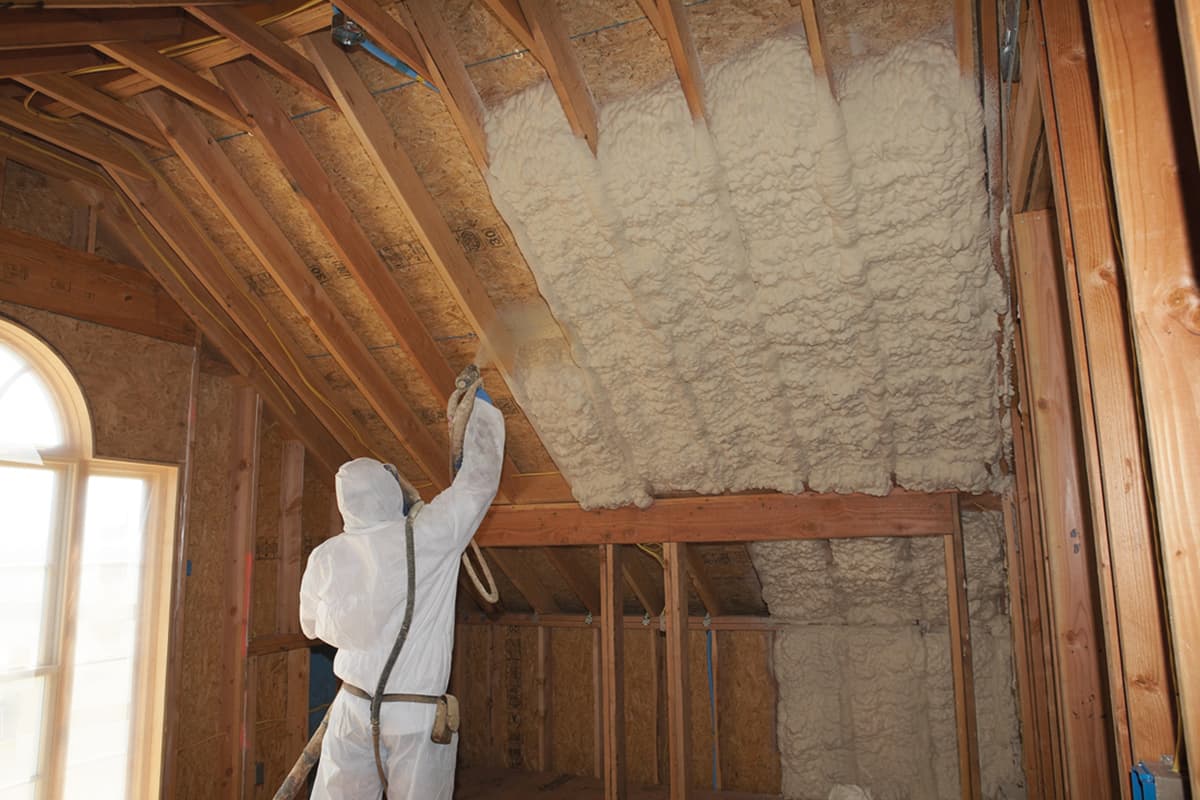
Spray foam insulation in progress
Attics, rooflines, and hard-to-reach gaps need the right insulation approach.
Plain English
Spray foam insulation does two jobs at once. It insulates, and it can help seal air leaks. That matters in NYC homes because a lot of comfort problems are not caused by one big opening. They come from many small gaps around framing, rooflines, rim joists, crawl spaces, and wall cavities.
If one room is always hot, one bedroom stays cold, or the top floor never feels right, the problem may be air movement. PrimeSeal looks at where the house is leaking air before recommending spray foam or any other insulation approach.
Common problems
These are the everyday comfort complaints that often lead homeowners to ask about attic spray foam, air sealing, or better insulation.
Drafts around attic hatches, top-floor rooms, trim, and old framing gaps
Hot upstairs rooms in summer and cold bedrooms in winter
Uneven temperatures between floors, additions, and finished attic spaces
Older homes in Queens, Brooklyn, the Bronx, Manhattan, Staten Island, and Long Island losing air through small openings
Utility bills that keep climbing even when the heating and cooling equipment is working
Best-fit areas
Spray foam is useful in the right spaces. It is not something to sell into every wall just because it exists.
Spray foam can help seal the roofline and reduce air movement where top-floor rooms take the most heat and cold.
These areas often leak air around the edge of the house. Foam can help tighten the space and reduce drafts.
In the right situations, foam can help with older framing, renovated spaces, and rooms that never feel like the rest of the house.
Small gaps around framing, penetrations, and roof transitions can add up. Spray foam is useful when access is tight.
Open-cell vs closed-cell
Homeowners do not need a chemistry lesson. They need to know which foam fits the space, why it is being recommended, and what tradeoffs come with it.
Lighter and softer. Often used in interior areas where the goal is to fill space, reduce air movement, and improve comfort.
Denser and stronger. It can provide more insulation value in less space, which can matter around tight framing or specific problem areas.
Benefits
Foam can seal small gaps that let outside air move through the house.
Better air sealing and insulation can help rooms feel more even through the day.
Many NYC homes have odd framing, tight rooflines, and places where traditional insulation is harder to install well.
What to expect
Spray foam should be recommended because it fits the home, not because it is the biggest-sounding option.
Step 1
We start with the rooms and spaces that feel wrong: drafts, hot spots, cold bedrooms, attic areas, crawl spaces, or unfinished framing.
Step 2
Spray foam is not the answer for every space. We explain where it makes sense and where another insulation or air sealing option may be better.
Step 3
Access, ventilation, protection, and cleanup expectations are discussed before work begins.
Step 4
The goal is a cleaner, tighter insulation approach for the areas that are actually causing comfort and air leakage problems.
Rebates and incentives
Some insulation and air sealing work may qualify for available incentives. PrimeSeal can help review program information and the paperwork needed for them.
Rebates, incentives, approvals, and savings are not guaranteed. Program rules, eligibility, and funding can change.
We can help organize project details, scope information, and related documentation homeowners may need when looking into available programs.
Service areas
We work with homeowners in borough homes, attached homes, older buildings, top-floor spaces, and suburban layouts.
Queens
Brooklyn
Bronx
Manhattan
Staten Island
Long Island
FAQ
It can be, especially when the attic or roofline is a major source of drafts, heat gain, or uneven temperatures. The right answer depends on access, roof conditions, ventilation needs, and how the space is used.
Open-cell foam is lighter and can work well for many interior applications. Closed-cell foam is denser and can add more resistance in less space. We explain the tradeoffs in plain language before recommending either one.
It may help reduce energy waste when air leaks and weak insulation are part of the problem, but savings are not guaranteed. The condition of the home, equipment, usage, and scope of work all matter.
Yes. We can provide guidance on available programs and the paperwork needed for them. Rebates and approvals are not guaranteed, and program rules can change.
PrimeSeal works across Queens, Brooklyn, the Bronx, Manhattan, Staten Island, and Long Island.
Free estimate
Tell us what rooms feel drafty, hot, cold, or uneven. We will look at the likely problem areas and explain the next step clearly.